














The Fast Facts
- Testing your hormone levels at home may provide insight into how your body functions.
- Our testers tried a range of at-home hormone tests from leading brands.
- Our top recommendations from Everlywell, myLAB Box, and Modern Fertility test levels of thyroid hormones, estradiol, and more.
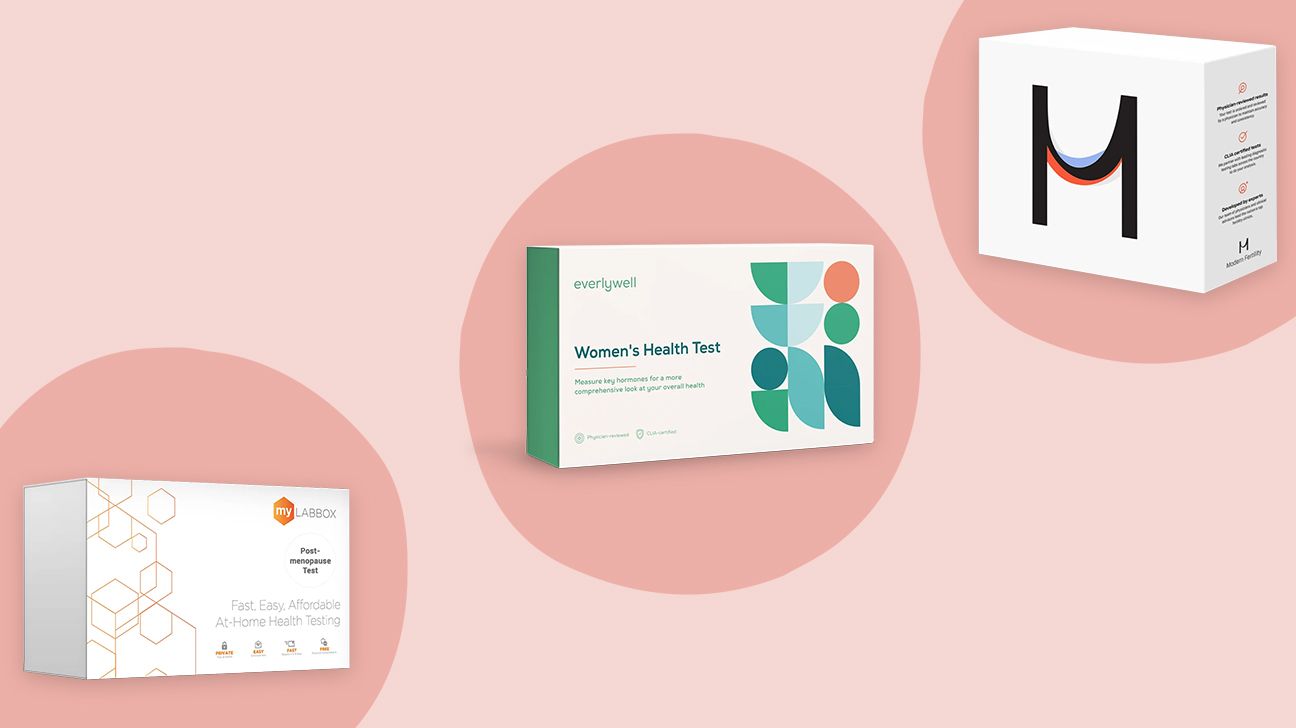
- Best overall for menopause: myLAB Box At-Home Perimenopause and Postmenopause Tests | Skip to review
Chronic fatigue, unexplained weight loss or gain, infertility, and hair loss can all signal a hormonal imbalance. You might consider a hormone test if you’re experiencing these or more.
Hormone tests can provide insight into thyroid function, fertility, and testosterone levels, among other considerations. The best at-home hormone test for you depends on the specific hormones you want to measure.
Here are five of the top hormone tests on the market and what they can teach you about your body.
• saliva sample
• progesterone
• LH
• FSH
• DHEA
• cortisol
• TSH
• free T3
• free T4
• free testosterone
• TPO
• saliva sample
• E2
• progesterone
• TSH
• FSH
• E2
• free T4
• PRL
• LH
• free T4
• free T3
• TGAB
• TPO
• TPX
A few important notes about at-home hormone tests
The at-home test kits included in this article have passed our vetting process. That said, most at-home tests are not approved by the Food and Drug Administration (FDA). Some don’t test as accurately or widely for certain antibodies, chemicals, or other variations as tests done through a lab or doctor’s office.
Though at-home tests may provide some quick information, the results may not be easy to understand. User error with the collection process can also sway results.
The tests listed are recommended while working with a healthcare professional to ensure you get the best possible care.
An important note: Do not change your medication based on at-home test kit results. Always consult a doctor before making changes to your medication. For abnormal results, ensure the tests are confirmed at a lab and with supervision and guidance from a healthcare professional.
When researching at-home hormone tests, we read online reviews to determine the best tests on the market. We also ensured that people working for these services are licensed, each test is analyzed in a certified lab, and the brands have
In addition, we considered the available research that supports each test, the company’s reputation, marketing processes, clinical relevance, and methodology.
We made sure the companies do not make any claims without scientific support, and we considered any legal action taken against a company, if at all.
We review products and services periodically to ensure they meet standards according to our vetting process.
There’s little information on how accurate at-home hormone tests are in particular. The direct-to-consumer testing market has expanded quickly, and scientific investigations into the accuracy of every type of at-home test have not been able to keep up.
The FDA states that there are
However, research
Although at-home testing can empower you to gain insight and control over your health and save you time and money, some researchers call for better regulation to ensure that at-home testing is safe and beneficial to your health.
Hormones serve as chemical messengers, carrying signals to different body areas and affecting vital functions like metabolism and growth. They are produced by the endocrine system and contain information that tells different organs and tissues throughout the body how to function.
Hormonal imbalances can cause symptoms including:
- unexplained weight gain
- hump between the shoulders
- unexplained and sometimes sudden weight loss
- fatigue
- pain, stiffness, or swelling in your joints
- increased or decreased heart rate
- sweating
- increased sensitivity to cold or heat
- constipation or more frequent bowel movements
- frequent urination
- increased thirst
- increased hunger
- decreased sex drive
- depression
- blurred vision
If you’re experiencing one or more of these symptoms, you can speak with a doctor who can perform a comprehensive exam.
At-home tests may be an option if you want to view your levels before speaking with a doctor, but only a medical professional can diagnose a hormone imbalance.
If you’re experiencing any of the above symptoms, including losing or gaining weight without trying, unexplained joint pain, severe fatigue, or abdominal pain that doesn’t go away, it’s important to speak with a doctor.
Also consider seeing a doctor if you’re trying to get pregnant and are having difficulty or if you’re experiencing other reproductive issues.
These are not conditions that can be self-diagnosed with an at-home test.
Dr. Philip Ngo, a pharmacist in Houston, said the use of at-home testing is limited in general. The exceptions are when testing for COVID-19, pregnancy, or sexually transmitted infections (STIs).
When testing for something as complex as hormones, it’d be difficult for most people to understand the results or know what to do next.
“For example, if [you] test for low testosterone, what are you going to do with that? [You] can’t buy testosterone over the counter,” Dr. Ngo said.
“At-home tests are great for your own personal knowledge, but if you want to take active steps toward treating whatever issue it is … [you want to] have a provider, in reading these tests, interpreting the results, to give you a formal diagnosis, versus you trying to wing it yourself and guessing at it.”
hormonal imbalance
Chris Airey
Think of your hormones as tiny messengers sending vital instructions throughout the body. If your hormones cannot deliver their message, your body functions can weaken.
At-home hormone tests can pinpoint which hormones might negatively affect your body. They can help a doctor provide a treatment plan to help regulate your system.
While at-home hormone tests are growing in popularity, they might not be as reliable as a lab-collected test. Regardless, at-home hormone tests may be a great starting point to get the health information you need.